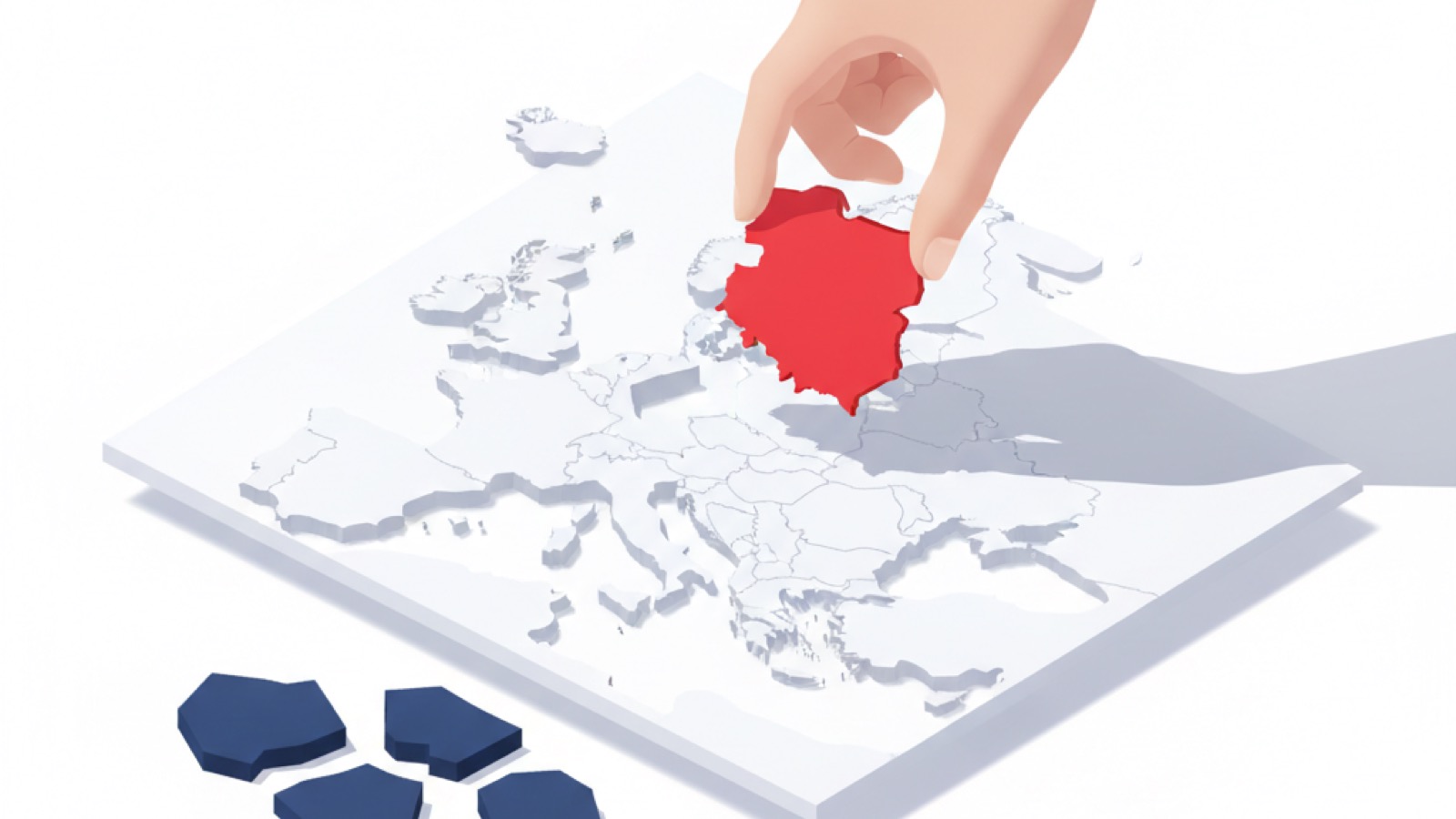
November 11 — Independence Day, an official public holiday
On November 11, Poland celebrates Narodowe Święto Niepodległości — the anniversary of regaining statehood in 1918 after 123 years of partition between three empires. It's one of Poland's 14 official public holidays (see our full calendar in a separate article), a state holiday with parades, not a religious one.
Three partitions that erased Poland from the map
In the late 18th century, neighboring empires — Russia, Prussia, and Austria — partitioned the Polish-Lithuanian Commonwealth three times: in 1772, 1793, and finally in 1795. After the third partition, Poland disappeared from the map of Europe as a state for 123 years. The cause was the Commonwealth's internal weakness (the liberum veto, which let a single deputy block any parliamentary decision) next to aggressive neighbors with absolute power.
The fight for independence continued throughout the partitions
Poles never accepted the loss of their state. 1794 saw the Kościuszko Uprising, the first national revolt. 1830 brought the November Uprising in Warsaw, after whose defeat the Great Emigration began. 1863 saw the January Uprising, again unsuccessful. In 1797 in Italy, General Jan Henryk Dąbrowski formed the Polish Legions — and it was for them that Józef Wybicki wrote the song "Poland Has Not Yet Perished," which became the national anthem in 1927.
Don't stop at the article
The bot has 750 questions in the format of a real consul interview, instant feedback, and a mock exam. Try it for free.
Check your level →November 11, 1918: Poland returns to the map
World War I lasted from August 1, 1914 to November 11, 1918, and led to the collapse of four empires at once — German, Austro-Hungarian, Ottoman, and Russian. On November 10, 1918, Józef Piłsudski returned to Warsaw after being imprisoned in the German fortress of Magdeburg. The next day, November 11, as Germany surrendered, the Regency Council — the provisional authority under German occupation — appointed him commander-in-chief of Polish forces, and on November 14 handed him full power before dissolving itself. Piłsudski received the official title of Chief of State (Naczelnik Państwa) by decree on November 22. Power passed not by force but through a legal transfer of authority — yet November 11 remained the symbolic date of Independence Day.
How it's celebrated today
Warsaw holds the Independence March (Marsz Niepodległości) every year — one of the largest street events in Poland. Buildings are decorated with white-and-red flags, and parades and state concerts take place. Józef Piłsudski remains the day's main symbol — he's most often credited with restoring Polish statehood.
The first president who barely got to serve
In December 1922, Professor Gabriel Narutowicz was elected the first President of the Second Polish Republic. His election was backed by votes from national-minority deputies — Jewish, German, Ukrainian — which triggered a wave of antisemitic propaganda from right-wing nationalists who falsely accused Narutowicz himself (in fact a Catholic) of being Jewish. On December 16, 1922, just five days after taking office, the painter Eligiusz Niewiadomski, linked to the right-wing National Democratic Party, shot the president dead at Warsaw's Zachęta Gallery. The assassin admitted he had originally planned to kill Piłsudski instead. He was executed by court sentence on January 31, 1923. It's one of the most tragic episodes of the young Polish state, one the consul might bring up as an example of how unstable the start of independence was.
What the consul asks
Questions about November 11 are among the most common in PLTest's historical question block: when Poland regained independence, how long the partitions lasted, who Józef Piłsudski was. The consul often asks about both major state holidays at once — May 3 and November 11 — to check whether you confuse the Constitution anniversary with the independence anniversary.
On November 11, 1918, after 123 years of partition between Russia, Prussia, and Austria.
Marshal of Poland (1867-1935), who took power as Chief of State on November 11, 1918, and defeated the Bolshevik army at the Battle of Warsaw in 1920.
Constitution Day on May 3 and National Independence Day on November 11.
Common mistakes
May 3 marks the 1791 Constitution, November 11 marks the 1918 restoration of independence. These are two separate state holidays.
123 years — from 1795 to 1918. A common mistake is giving a round number like 100 or 150.
"Who declared independence" is one of the most common questions, and the correct answer always includes Józef Piłsudski's name.
November 11 is a purely state holiday with parades, with no religious component, unlike most of the other 13 official holidays.
Frequently asked questions
What is celebrated on November 11 in Poland?
Narodowe Święto Niepodległości — the anniversary of Poland regaining its statehood in 1918 after 123 years of partition.
How many years did Poland not exist as a state?
123 years, from 1795 to 1918, after three successive partitions between Russia, Prussia, and Austria.
Who took power in Poland on November 11, 1918?
Józef Piłsudski, as Chief of State (Naczelnik Państwa).
How is Independence Day celebrated today?
The main event is the Independence March in Warsaw, one of the largest in Europe. There are also parades, concerts, state ceremonies, and white-and-red flags everywhere.
Who was Poland's first president?
Gabriel Narutowicz, elected in December 1922 — tragically shot dead 5 days after taking office.