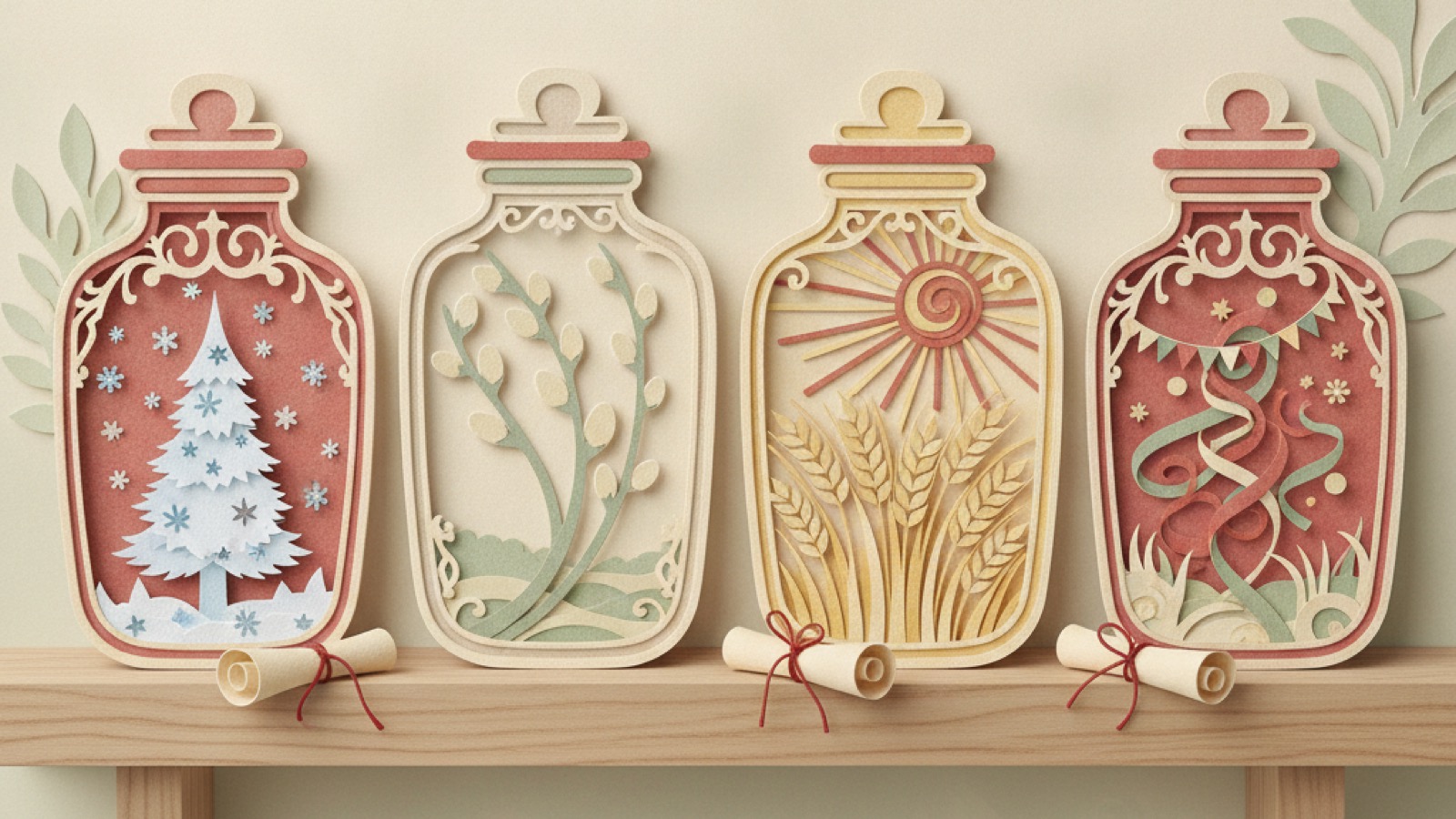
The consul does not ask «what is Wigilia» — they ask «how does your family celebrate Christmas». The difference is fundamental. Here are ready phrases in Polish for the most popular tradition topics — so your answer sounds natural, not like a Wikipedia article.
Polish holidays are one of the most common topics during the Karta Polaka and citizenship interview. The consul wants to hear not encyclopaedic facts but a personal connection: does your family follow these traditions, do you know them firsthand.
This article is not about what Christmas or Easter are. These are templates: how to structure an answer in Polish, what phrase to start with, how to move from the general to the personal.
Key rule: start with the general (what kind of holiday this is), then move to the personal (how your family celebrates it). The consul is not listening to an encyclopaedia — they are listening to whether this is part of your life.
The full list of all 14 official days off in Poland with 2026 dates is in the article "Holidays in Poland: 14 official days off". It is based on the official text of the Ustawy o dniach wolnych od pracy.
Boże Narodzenie — Christmas
Key Christmas traditions
Wigilia — Christmas Eve dinner on December 24, meatless, 12 dishes, wait for the first star in the sky, share the opłatek (blessed wafer). Kolędy — Christmas carols. Prezenty — gifts under the Christmas tree. The holiday is celebrated on December 25 and 26.
Boże Narodzenie to dla mnie najważniejsze polskie święto rodzinne.
Christmas is the most important Polish family holiday for me.
Wigilia zaczyna się, gdy pojawi się pierwsza gwiazda na niebie.
Wigilia begins when the first star appears in the sky.
Wtedy łamiemy się opłatkiem i składamy sobie życzenia.
Then we break the wafer and wish each other well.
Na stole jest dwanaście potraw, bo według tradycji każda potrawa symbolizuje miesiąc roku.
There are twelve dishes on the table — by tradition each represents a month of the year.
W naszej rodzinie zawsze śpiewamy kolędy po kolacji.
In our family we always sing carols after dinner.
Don't stop at the article
The bot has 750 questions in the format of a real consul interview, instant feedback, and a mock exam. Try it for free.
Check your level →
Wielkanoc — Easter
Key Easter traditions
Święconka — basket of blessed food (eggs, bread, sausage, salt, horseradish), taken to church on Holy Saturday. Pisanki — decorated eggs. Śmigus-dyngus — Wet Monday, the 2nd day of Easter, tradition of splashing with water. The most important holiday in the Catholic calendar — symbol of resurrection.
Wielkanoc to najważniejsze święto w kalendarzu katolickim.
Easter is the most important holiday in the Catholic calendar.
W Wielką Sobotę niesiemy koszyk ze święconką do kościoła.
On Holy Saturday we take a basket of blessed food to church.
W koszyczku są jajka, chleb, kiełbasa, sól i chrzan — każdy z własnym symbolicznym znaczeniem.
In the basket are eggs, bread, sausage, salt and horseradish — each with its own symbolic meaning.
W Poniedziałek Wielkanocny oblewamy się wodą — to tradycja zwana śmigus-dyngus.
On Easter Monday we splash each other with water — a tradition called śmigus-dyngus.
Dzieci w rodzinie malują pisanki — kolorowe, ozdobione wzorami jajka.
Children in the family decorate pisanki — colourful patterned eggs.
Dzień Niepodległości — Independence Day
Key facts about November 11
11 November 1918 — Poland regained independence after 123 years of partition. The Marsz Niepodległości (Independence March) takes place in Warsaw. Red-and-white flags everywhere. Official holiday with parades and concerts. Józef Piłsudski is the central figure of the day.
Dzień Niepodległości obchodzimy 11 listopada — w rocznicę odzyskania przez Polskę niepodległości w 1918 roku.
We celebrate Independence Day on November 11 — the anniversary of Poland regaining independence in 1918.
Polska przez 123 lata była podzielona między Rosję, Prusy i Austrię.
Poland was partitioned for 123 years between Russia, Prussia and Austria.
W Warszawie odbywa się Marsz Niepodległości, a na budynkach wiszą biało-czerwone flagi.
In Warsaw the Independence March takes place and red-and-white flags hang on buildings.
Józef Piłsudski jest symbolem tego dnia — to on doprowadził do odbudowy państwa polskiego.
Józef Piłsudski is the symbol of this day — he was the one who achieved the restoration of the Polish state.
Wniebowzięcie NMP — August 15
Key facts about August 15
Wniebowzięcie Najświętszej Maryi Panny (the Assumption) is a religious holiday (a dogma since 1950), and at the same time Święto Wojska Polskiego (Polish Armed Forces Day) is a state holiday marking the victory in the 1920 Battle of Warsaw (the Cud nad Wisłą, or Miracle on the Vistula). The modern date of the Armed Forces holiday was set by a Sejm law only in 1992. The folk name for the day is Matka Boska Zielna, when bouquets of herbs and flowers are blessed.
15 sierpnia obchodzimy w Polsce dwa święta jednocześnie.
On August 15, Poland celebrates two holidays at once.
Pierwsze to Wniebowzięcie Najświętszej Maryi Panny — święto kościelne.
The first is the Assumption of the Blessed Virgin Mary — a religious holiday.
Drugie to Święto Wojska Polskiego, upamiętniające zwycięstwo w Bitwie Warszawskiej z 1920 roku.
The second is Polish Armed Forces Day, marking the victory in the Battle of Warsaw of 1920.
To zwycięstwo nazywane jest Cudem nad Wisłą.
That victory is called the Miracle on the Vistula.
W wielu rodzinach tego dnia święci się też bukiety ziół i kwiatów — stąd ludowa nazwa Matka Boska Zielna.
In many families, bouquets of herbs and flowers are also blessed on this day — hence the folk name Matka Boska Zielna.
When the consul asks «how does your family celebrate Christmas» — they expect an answer with details and personal experience. «We celebrate Christmas» — poor answer. «We gather for Wigilia, break the wafer and wait for the first star» — good answer.
How not to make mistakes
- Do not confuse Wielkanoc (Easter) and Boże Narodzenie (Christmas) — these are different holidays with different traditions.
- Śmigus-dyngus is specifically Easter Monday, not Christmas.
- The opłatek is broken at Wigilia (December 24), not at Easter.
- Dzień Niepodległości is November 11, not May 3 (May 3 is Dzień Konstytucji — a different holiday).
- Add a personal phrase: «W naszej rodzinie...» (In our family...) — this turns the answer from a reference book into a living story.
- Don't confuse Wniebowzięcie NMP (August 15) with Wszystkich Świętych (November 1) — these are different holidays with different origins and traditions.
These four topics — Christmas, Easter, Independence Day, and Wniebowzięcie — cover most of the consul's questions about traditions. But the same core principle applies to any holiday: first the general fact, then a personal detail from your own family's life.
The consul is not testing encyclopaedic knowledge — they are checking whether the holiday is part of your cultural experience. The phrase «W naszej rodzinie zawsze...» (In our family we always...) is the shortest bridge between a fact and personal belonging.
Practise answers in PLTest
The bot asks questions about holidays and traditions just like the consul does. After daily sessions the answer comes automatically — without searching for words or pausing.
Open PLTest →
PLTest Editorial Team
We prepare content based on official sources — the Act on the Karta Polaka, MSZ clarifications, and gov.pl — and fact-check every legal claim before publishing. Questions in the PLTest database are verified against the experience of hundreds of users who have already gone through the consul interview.