Who was Jadwiga: queen at 11
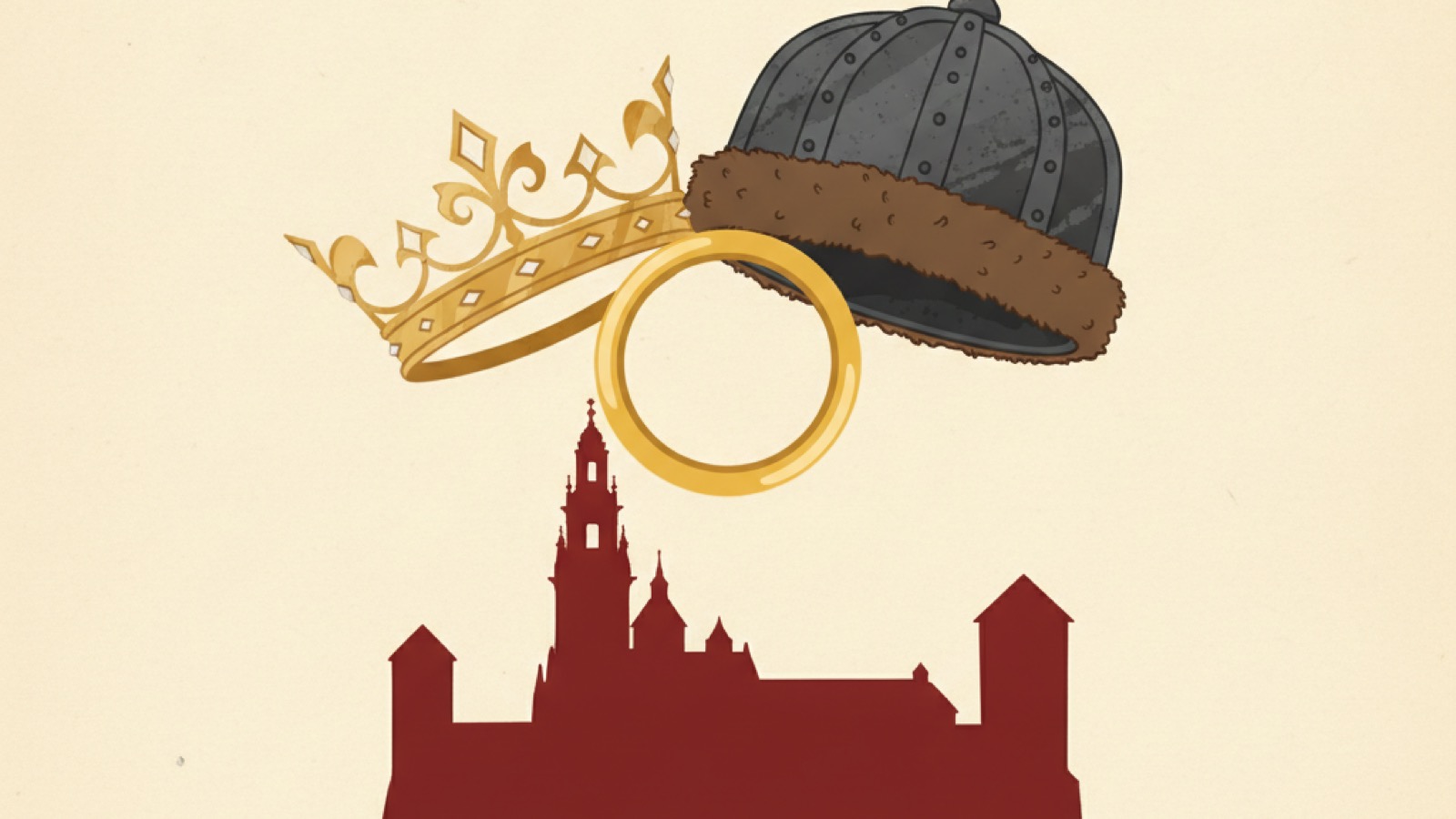
Polish history is full of turning points, but the events of the late 14th century stand apart because they revolve around a truly remarkable woman. Jadwiga of Anjou was born in 1373 into the family of the powerful Louis of Hungary, who ruled both the Hungarian and Polish crowns. After her father died, the Polish nobility refused to accept a mere regent, which led to an unprecedented decision. On October 16, 1384, at Wawel Cathedral, the eleven-year-old girl was officially crowned as the King of Poland. In legal documents, she was referred to as "rex," a title that established her as a sovereign monarch rather than just a queen consort. While this gave her the legal right to make decisions, her young age meant she was surrounded by experienced advisors who were already arranging a marriage that would become the most important alliance of the era. At that time, Jadwiga had already been betrothed for several years to the Austrian prince William of Habsburg.
Who was Jagiełło: Europe's last pagan ruler
While the young queen was adjusting to the weight of the crown in Kraków, the Grand Duke of Lithuania, Jagiełło, was expanding his influence in the north. He was the son of the famous Algirdas and ruled over the last officially pagan state in Europe. Lithuania was a vast and powerful nation, but it faced a constant threat from the Teutonic Order. These crusader knights used the paganism of the Lithuanians as a pretext for bloody raids and land grabs, claiming they were spreading the faith when they were actually seeking power. Jagiełło realized his state needed an ally and an official conversion to Christianity to strip the Teutons of their ideological justification. When preparing for an interview with the consul, it is important to remember that the shared threat of the Teutonic Order served as the catalyst that brought Poland and Lithuania together.
The Union of Krewo, 1385: a deal, not a courtship
In 1385, an event occurred that history books now call the Union of Krewo. This was not a romantic courtship but a pragmatic political treaty with massive implications. Jagiełło committed to accepting Catholic baptism along with his entire nation, marrying Jadwiga, and becoming the King of Poland. The central point of the agreement was the union of Lithuanian and Ruthenian lands with the Crown of Poland, which created an unprecedented military power. The text of the treaty said nothing about the queen's feelings because the survival of nations and the chance to stop the expansion of the crusaders were at stake.
What about William? A broken engagement and the axe legend
For Jadwiga, these events were a personal tragedy because her childhood engagement to William of Habsburg had lasted for years and she had grown fond of the prince. In the summer of 1385, William arrived in Kraków to demand the completion of the marriage. The chronicler Jan Długosz describes these events with great drama. He writes that the young couple met secretly in the refectory of a Franciscan monastery, but the Polish lords could not allow this union to happen. When William was eventually expelled from Wawel Castle, the furious queen reportedly seized an axe and tried to break down the castle gates to follow him. Modern historians suggest that this scene with the axe may be a later legend, yet it vividly illustrates the resistance her heart felt toward political necessity. Duty eventually won, and in early 1386, Jadwiga was forced to publicly and permanently break her engagement to William.
Don't stop at the article
The bot has 750 questions in the format of a real consul interview, instant feedback, and a mock exam. Try it for free.
Check your level →Baptism and wedding: February 1386
February 1386 marked the beginning of a new era when the Lithuanian prince arrived in Kraków to fulfill the terms of the union. On February 4, Jagiełło was baptized into the Catholic faith and took the Christian name Władysław, which symbolized his entry into the family of European monarchs. A few days later, a grand wedding with Jadwiga took place at Wawel Cathedral, although the exact date remains a subject of debate among historians. The final stage occurred on March 4, 1386, when Władysław Jagiełło was officially crowned King of Poland. From that moment on, he became the co-ruler with his wife. This event is considered the beginning of the Jagiellonian dynasty, a topic that often appears during the Karta Polaka interview.
The legend of the Black Crucifix: 'Do what you see'
Folk memory has preserved a mystical story that explains how a young girl found the strength to accept this marriage. It is said that during those difficult days, Jadwiga spent hours praying before a large, black Gothic crucifix in the northern aisle of Wawel Cathedral. She asked God for a sign to know if she was doing the right thing by giving her life to a stranger for the sake of the state. According to the legend, the crucified Christ spoke to her and said "Czyń, co widzisz," which translates to "Do what you see." The queen understood this as a call to fulfill her mission and bring the light of faith to the Lithuanian lands. This crucifix, known today as the Cross of Saint Jadwiga (Wawel Cathedral's official site), is still kept at Wawel, and her relics lie beneath it.
Love or calculation? What historians say
Looking at this marriage through the lens of history, it is difficult to find a clear answer regarding the couple's feelings. Historians agree that the union was primarily the result of political calculation, especially since the age gap was significant. Jadwiga was about twelve years old, while researchers estimate Jagiełło was between 33 and 36 at the time of the wedding. Written sources have not preserved records of Jadwiga's personal emotions, so we can only guess whether she felt silent obedience to her advisors or a deep sense of sacrifice for the sake of Christianity. However, it is worth noting that when Jadwiga died in 1399 following a difficult childbirth at the age of only 26, Jagiełło was devastated. Chroniclers write that he mourned her deeply and wore her wedding ring until the end of his life even though he married three more times.
The legacy of the marriage: the Jagiellons, Grunwald, the university
The consequences of this marriage were monumental because the Jagiellonian dynasty ruled Poland from 1386 to 1572 and brought the country to the height of its power. The combined potential of the two nations made the victory over the Teutonic Order at the Battle of Grunwald in 1410 possible, which broke the back of the crusaders' expansion forever. The union also served as the foundation for the Union of Lublin in 1569, which created the Polish-Lithuanian Commonwealth. Beyond politics, Jadwiga left a profound cultural legacy. In her will, she donated all her personal jewelry to restore the Kraków Academy, which is now known globally as the Jagiellonian University. Her life became a symbol of service, and in 1997, Pope John Paul II canonized her as Saint Jadwiga the Queen. For anyone preparing for a conversation with the consul, this story is a key to understanding how personal courage and political wisdom built the greatness of Polish history.
What does the consul ask?
Questions about the Union of Krewo, the marriage of Jadwiga and Jagiełło, and the start of the Jagiellonian dynasty regularly appear among the verified questions in the PLTest database.
The Union of Krewo, 1385. It combined the baptism of Lithuania, the marriage to Jadwiga, and a military alliance against the Teutonic Order.
Władysław II Jagiełło, after marrying Queen Jadwiga in 1386.
The daughter of King Louis of Hungary, crowned king of Poland in 1384 at about 11 years old. She married Jagiełło in 1386 and was canonized in 1997.
Common mistakes
Jadwiga herself was a crowned monarch with the title rex, not a queen consort.
The Union of Krewo was signed in 1385, while Jagiełło's baptism and wedding took place only in 1386.
It is a religious tradition, not a documented event. It's safer to cite facts: the date of the union, the wedding date, the coronation date.
Frequently asked questions
How old was Jadwiga when she married?
About 12 years old.
Did Jadwiga love Jagiełło?
Sources give no definitive answer. The marriage was primarily a political decision, and the queen's personal feelings remain a matter of historical debate.
Why did Jagiełło have to be baptized?
Lithuania was the last pagan state in Europe. Baptism was a condition of the Union of Krewo and of marrying a Catholic queen.
What happened to Jadwiga's fiancé William of Habsburg?
The engagement was broken off in early 1386. The story of a secret meeting and an attempt to break down the castle gate is an unproven legend from Jan Długosz's chronicle, not an established fact.
Which dynasty began with the marriage of Jadwiga and Jagiełło?
The Jagiellonian dynasty, which ruled Poland from 1386 to 1572.