What is Wigilia, and why has it only been a holiday since 2025?
Wigilia (from the Latin vigilia — «watch», «vigil») is the supper on the eve of Christmas, December 24, which opens the most important holiday of the year for a Polish family. The name is historically tied to fasting and keeping watch before the birth of Christ: the whole day before supper is traditionally spent fasting, and the supper itself begins as soon as the first star appears in the sky — a symbol of the Star of Bethlehem.
Wigilia closes out Advent — the four-week period of fasting and waiting before Christmas. That same evening, after weeks of dietary restraint, the family sits down for the first time to a rich, if meatless, table — one reason this particular supper carries such ritual weight for Poles, more than Christmas Day itself.
For Karta Polaka applicants, this change also has a practical side: if your consul interview happens to fall on December 24, the consulate is officially closed that day — worth keeping in mind when planning a visit date or watching for open slots.
12 dishes: what's on the table and what they symbolize
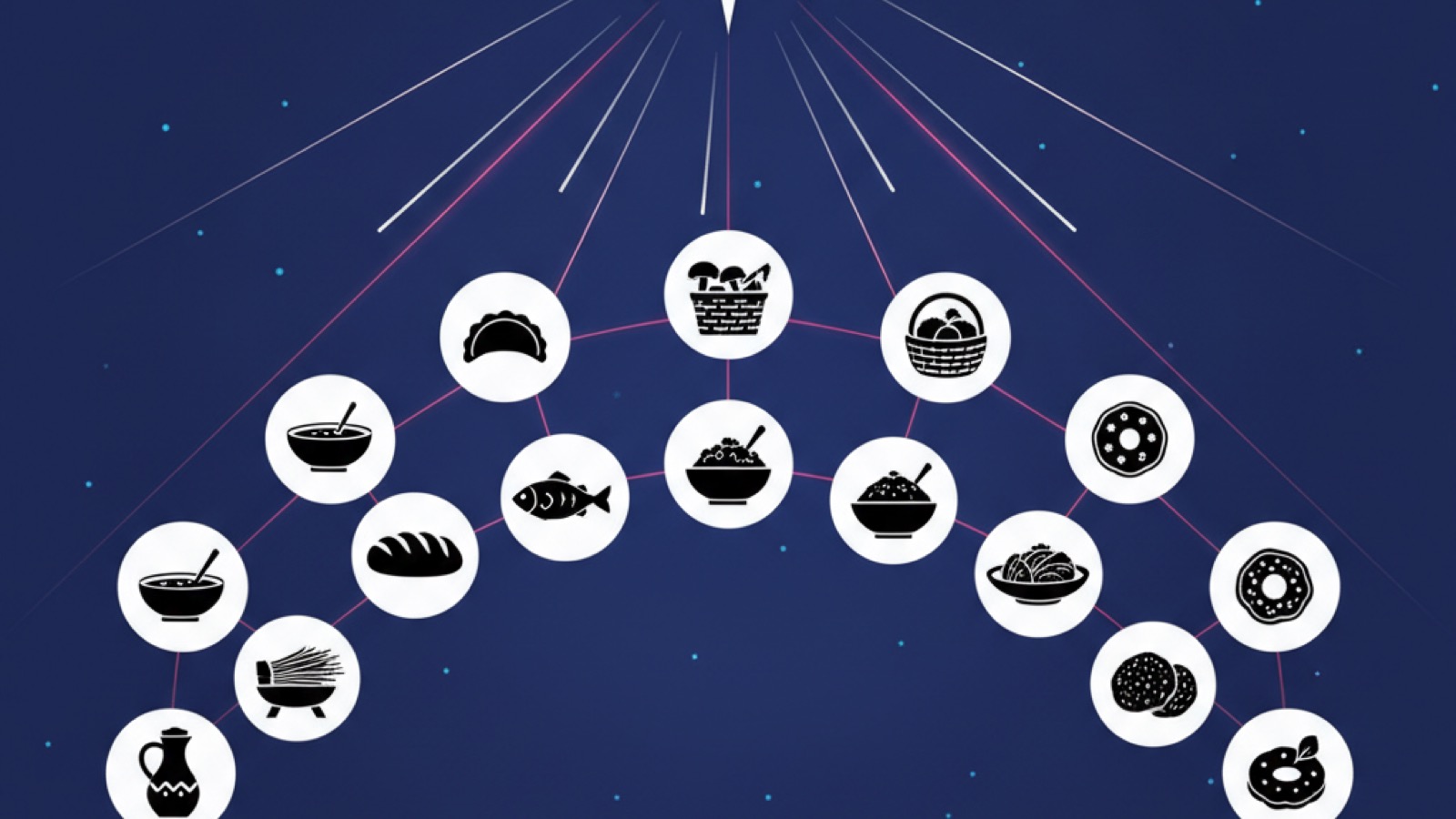
The main rule of the Wigilia table is twelve meatless dishes. According to folk explanation, the number symbolizes the twelve apostles; another version says it stands for the twelve months of the year, so the coming year is well-fed. Every family's list differs, but a few dishes appear almost everywhere:
Red beet soup with uszka — small dumplings with a mushroom filling. The most common first course, served in almost every family.
Carp — fried or in aspic, the main fish dish of the supper and the most recognizable symbol of Polish Wigilia abroad.
Dumplings, most often filled with cabbage and mushrooms — a meatless version with no dairy.
Wheat, poppy seed, and honey pudding — especially common in Poland's eastern regions.
Mushroom soup — an alternative to borscht with uszka in families that don't serve barszcz.
Herring — in oil, in sour cream, or with onion, one of the oldest traditional starters of the supper.
Cabbage rolls with rice and mushrooms — a meatless version of ordinary gołąbki, without meat filling.
Braised cabbage with mushrooms — often a separate dish or a filling for pierogi or gołąbki.
Dried fruit compote — the supper's traditional drink, often the only dessert-adjacent element before the sweet pastries.
Poppy seed roll — one of the main desserts of the Wigilia table alongside kutia.
Cheesecake — another typical dessert that often appears on the Wigilia table next to makowiec.
Peas with cabbage — an older traditional dish, less common today but still present in some families.
You don't need to repeat this list word for word — the consul isn't expecting a memorized answer, but a real list of your own family's dishes. The key thing not to get wrong: all twelve dishes are meatless.
The list of dishes isn't identical across the country: kutia and dried-fruit compote appear more often in Poland's eastern regions and among families with roots in the former Kresy, while central and western Poland often skip kutia and add more pastries instead. If your family doesn't make one of the twelve dishes, that's normal — what matters is understanding the logic of the number itself, not memorizing someone else's list.
Don't stop at the article
The bot has 750 questions in the format of a real consul interview, instant feedback, and a mock exam. Try it for free.
Check your level →Traditions that aren't about food
Food is only part of the evening. A few rituals matter just as much as what's on the table, and these are exactly what the consul asks about most:
- The first star (pierwsza gwiazda) — supper begins as soon as the first star appears in the sky, a symbol of the Star of Bethlehem that guided the Magi to the infant Christ.
- Breaking the opłatek — before supper, every family member breaks off a piece of a blessed unleavened wafer with each other, exchanging wishes for the coming year. It's one of the most recognizable symbols of Polish identity, and consuls often check this exact word.
- Hay under the tablecloth (sianko pod obrusem) — a thin layer of hay is placed under the tablecloth as a reminder of the manger where Christ was born.
- An empty seat at the table (wolne miejsce) — traditionally left for an unexpected guest, or in memory of relatives who can't be there that evening.
- Gifts (prezenty) — in most Polish families, gifts are opened on the evening of December 24, right after supper, not on the morning of the 25th. Worth knowing if the consul asks specifically about the order of the evening.
- After supper — carols (kolędy), and for believers, midnight Mass (Pasterka).
For ready-made phrases on how to describe these traditions in Polish during the interview, see «Christmas, Easter, Independence Day: ready-made answers in Polish».
What the consul asks about Wigilia
One of the most common questions in a Karta Polaka interview goes roughly like this: «Jak przebiega kolacja wigilijna, co podaje się na stół?» — «How does the Christmas Eve supper go, what's served at the table?». The consul isn't looking for a textbook answer, but whether Wigilia is a living family tradition for you.
The question can also come more broadly: «Jak Pan/Pani obchodzi święta — państwowe czy kościelne? Wielkanoc czy Boże Narodzenie?» — «How do you celebrate holidays — state or church? Easter or Christmas?». In one documented case (Kharkiv consulate), after a general answer about Ukrainian holidays, the consul kept probing: «a jak pan mieszkał na Ukrainie to jak pan to obchodził» and «gdzie pan chodził do świątyni w swojej miejscowości» — the interview ended in a refusal, with a recommendation to reapply in a year. The lesson is simple: a general line like «I celebrate both state and church holidays» isn't enough — you need to be ready to describe specifically how Wigilia actually goes in your family.
Common mistakes to avoid:
- Mentioning meat dishes (sausage, meat broth) — the supper is meatless, so meat on the table is a clear mistake.
- Naming fewer or more than 12 dishes without explaining why that specific number.
- Mixing up names or not knowing the Polish terms for the main dishes — it's «barszcz z uszkami».
- Giving a dry, list-style answer with no personal detail — the consul is looking for a living tradition, not a Wikipedia entry.
- Confusing Wigilia (December 24, the supper itself) with Boże Narodzenie (December 25-26, the holiday days) — these are related but different things.
The best strategy is to replace the examples in this article with the real dishes and rituals of your own family, and add one personal detail (who fries the carp, whose tradition it is to leave the empty seat) instead of a dry recitation.
An example of a short, «living» answer: «In our family, Wigilia begins when the first star appears in the sky. We break the opłatek and wish each other good health, then sit down to a table of twelve dishes — borscht with uszka, carp, pierogi, kutia. One seat is always left empty, just in case someone stops by.» Short, specific, full of detail — exactly what the consul is looking for.
The quickest way to check you're ready is to say your family's Wigilia out loud in Polish in 30 seconds, as if answering the consul right now. If it comes out naturally, with no pauses to recall words, you're ready. If not, the «Mock interview» mode in the PLTest bot lets you practice exactly this kind of answer with a timer and instant feedback.
Frequently asked questions
How many dishes are traditionally served at Wigilia, and why that number?
Twelve meatless dishes — according to folk explanation, the number symbolizes the twelve apostles. The exact list differs by family; the key point is the absence of meat.
Since which year has Wigilia been an official public holiday in Poland?
Since 2025, following the Act of December 6, 2024 (Ustawa z 6 grudnia 2024 r.). Before that, December 24 was not an official public holiday, although many employers let staff leave earlier by agreement.
What is opłatek and why is it broken and shared?
Opłatek is a blessed unleavened wafer. Before supper, family members take turns breaking off a piece with one another and exchanging wishes for the coming year. It's one of the most important symbols of Polish Christmas.
Why is an empty seat left at the table?
The empty seat (wolne miejsce) is traditionally left for an unexpected guest, or in memory of relatives who can't be there that evening. It's a symbol of hospitality and family remembrance.
Do you need to memorize the entire list of 12 dishes for the consul interview?
No, the consul isn't looking for a memorized list, but for the fact that the supper is a living tradition for you. It's better to name a few real dishes from your own family and explain 1-2 traditions (opłatek, the empty seat) than to recite all twelve items without a single detail.